Your Veggies Pass Through Up To 8 Middlemen Before Reaching You: How Community Pre-Orders Cut Food Waste From 50% To Almost Zero
By the time supermarket greens hit your plate, they've passed through eight middlemen—and half of the harvest has already rotted in transit. Here’s how neighborhood community pre-orders bring farm-gate harvests to your doorstep in under 6 hours at half the price.
In conventional agricultural supply chains, food distribution remains bound to a fragmented, century-old wholesale framework. When a farmer harvests tropical fruits or leafy vegetables, the produce rarely travels straight to a market. Instead, it passes through an exhausting relay of at least eight intermediate hands:
- Smallholder Farm Gate: Farmer cuts produce at random intervals based on speculative market forecasts.
- Village Collector / Runner: Local intermediary collects loose crates, taking a 15% margin for sorting.
- Regional Aggregator: Consolidates loads in non-refrigerated sheds; produce experiences thermal degradation.
- Primary Terminal Wholesale Market: (e.g. regional terminal markets). Crated on open concrete floors; rough handling and exposure.
- Secondary Jobber / Broker: Splits pallet loads into broken cases for city distribution.
- Regional Distribution Distributor: Trucks crates to metropolitan sub-depots; 36 to 48 hours have elapsed.
- Wet Market Stall / Grocery Retailer: Trims decayed outer leaves and discards spoiled fruit to salvage margins.
- End Consumer: Buys bruised, degraded produce at a 300% price markup over farm-gate value.
At every transition point, approximately 18% to 22% of delicate produce is damaged, overheated, or discarded. Compounded across eight handoffs, more than 50% of the total food mass harvested in rural orchards is destroyed before it ever reaches a dinner table.
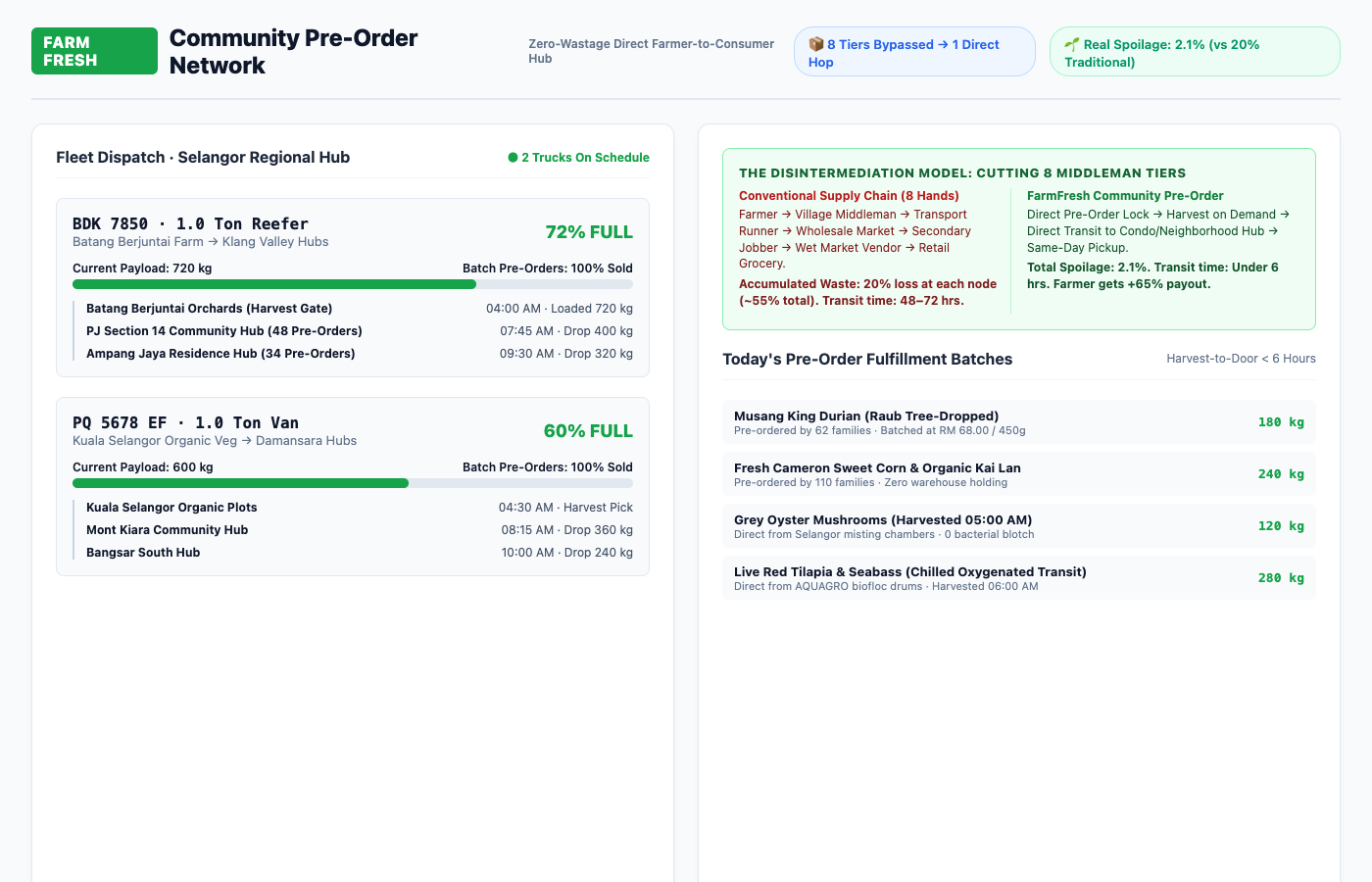
The Disintermediation Solution: Community Pre-Orders
FarmFresh replaces speculative distribution with an aggregated community pre-order protocol. Demand is locked digitally within urban residential hubs (condominiums, resident associations, corporate campuses) 48 hours in advance:
| Supply Vector | Conventional 8-Hand Wholesale Supply | FarmFresh Community Direct Hop |
|---|---|---|
| Harvest Trigger | Speculative guessing. Produce harvested without guaranteed buyers; excess dumped when prices crash. | 100% Pre-Sold Demand. Farmers harvest only what urban communities have locked and pre-paid. |
| Transit Time | 48–72 hours. Produce sits on hot wholesale tarmac, rotting under humid tropical air. | < 6 hours. Picked at 04:00 AM; loaded onto direct reefer vans; delivered to hubs by 09:30 AM. |
| Cumulative Spoilage | 45% to 55% total loss. ~20% wastage compounded at each loading, unloading, and handling step. | 2.1% total spoilage. Produce remains in original farm-gate harvest crates directly to pickup. |
| Farmer Realization | 20% of retail price. Delayed 60–90 day payment cycles; unilateral deductions for "spoilage". | 65% of consumer price. Instant same-day digital settlement upon hub arrival. |
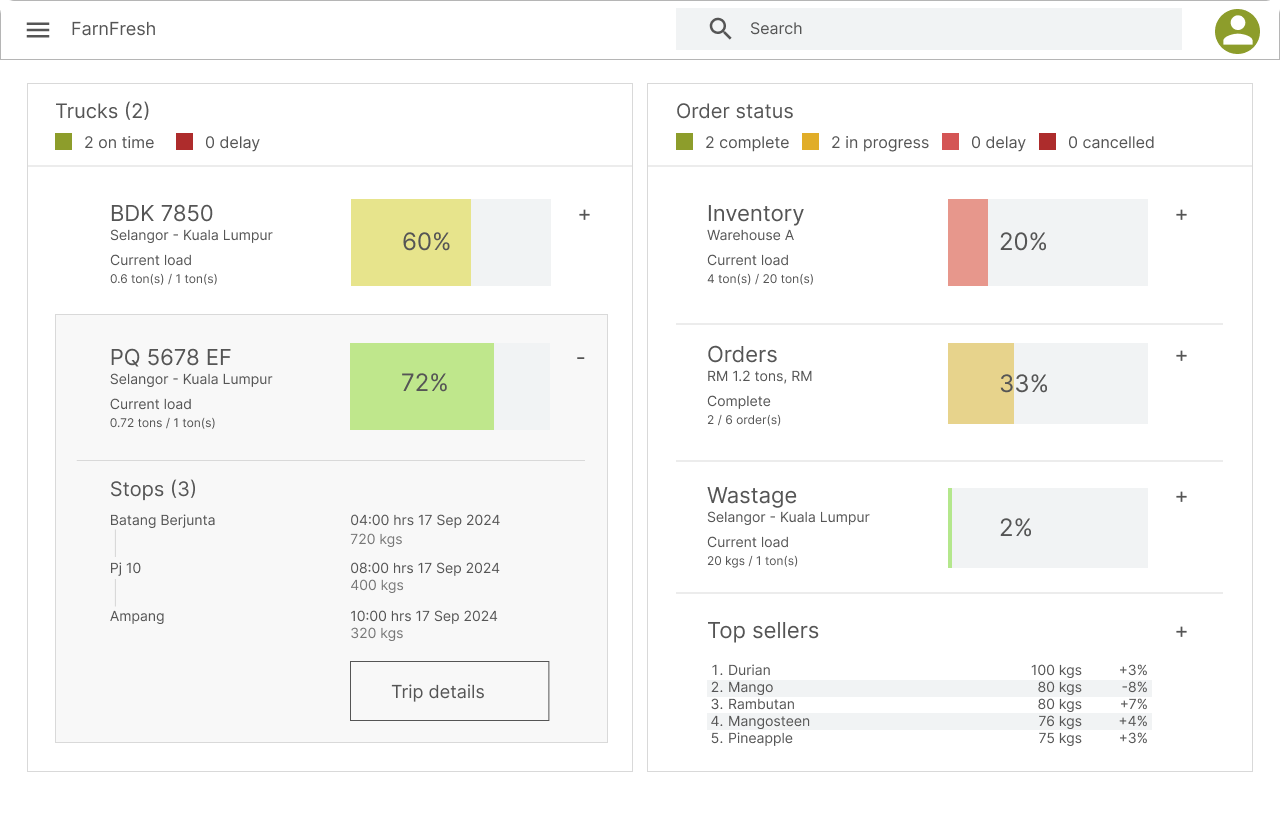
Fleet Route Optimization & Dispatch Wireframes
Refrigerated transit routes operate on continuous multi-stop optimization, moving directly from rural smallholder farm gates to clustered urban residential drop points:
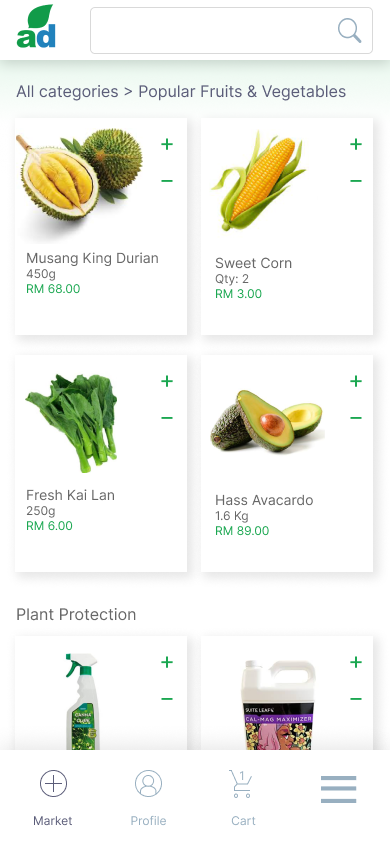
Hyper-Local Community Marketplace
Consumers access fresh harvests through the FarmFresh mobile web application, browsing direct farm offerings with transparent harvest timestamps and origin plots:
Lean Business Model Canvas
- Food moves through 8 hands with ~20% compounding loss per tier (~50% total).
- 48–72 hr transit times reduce freshness, shelf life, and nutritional value.
- Smallholders squeezed into unviable 20% price realizations.
- Urban residential condominium resident associations (Klang Valley).
- Health-conscious families seeking traceable, low-chemical produce.
- Smallholder farmers within 150 km radius of urban centers.
- Sub-6-hour harvest-to-table delivery with 2.1% measured wastage.
- 30–40% price discount below premium grocery retail.
- 65% take-home payout for farmers with instant same-day settlement.
- 12% to 15% platform facilitation fee on pre-order batch turnover.
- Consolidated cold-chain transport logistics per-crate fee.
- Enterprise subscription for corporate employee wellness fresh baskets.
- Cold-chain van fleet leasing, driver wages, and route fuel.
- Reusable sanitized food-grade plastic crate pools.
- Community hub captain incentives and platform payment gateways.
- Zero inventory risk: produce is harvested only after 100% pre-order lock.
- Direct relationships with residential condo committees across Klang Valley.