Tilapia Can Die In Just 45 Minutes If Oxygen Drops: How Smart Cameras & IoT Telemetry Prevent High-Density Biofloc Crashes
Imagine having 1,000 live fish in a drum and knowing the exact second they’re full. Here’s how overhead AI cameras and sub-second water sensors prevent midnight tank crashes, slash ammonia spikes, and cut feed costs by 18%.
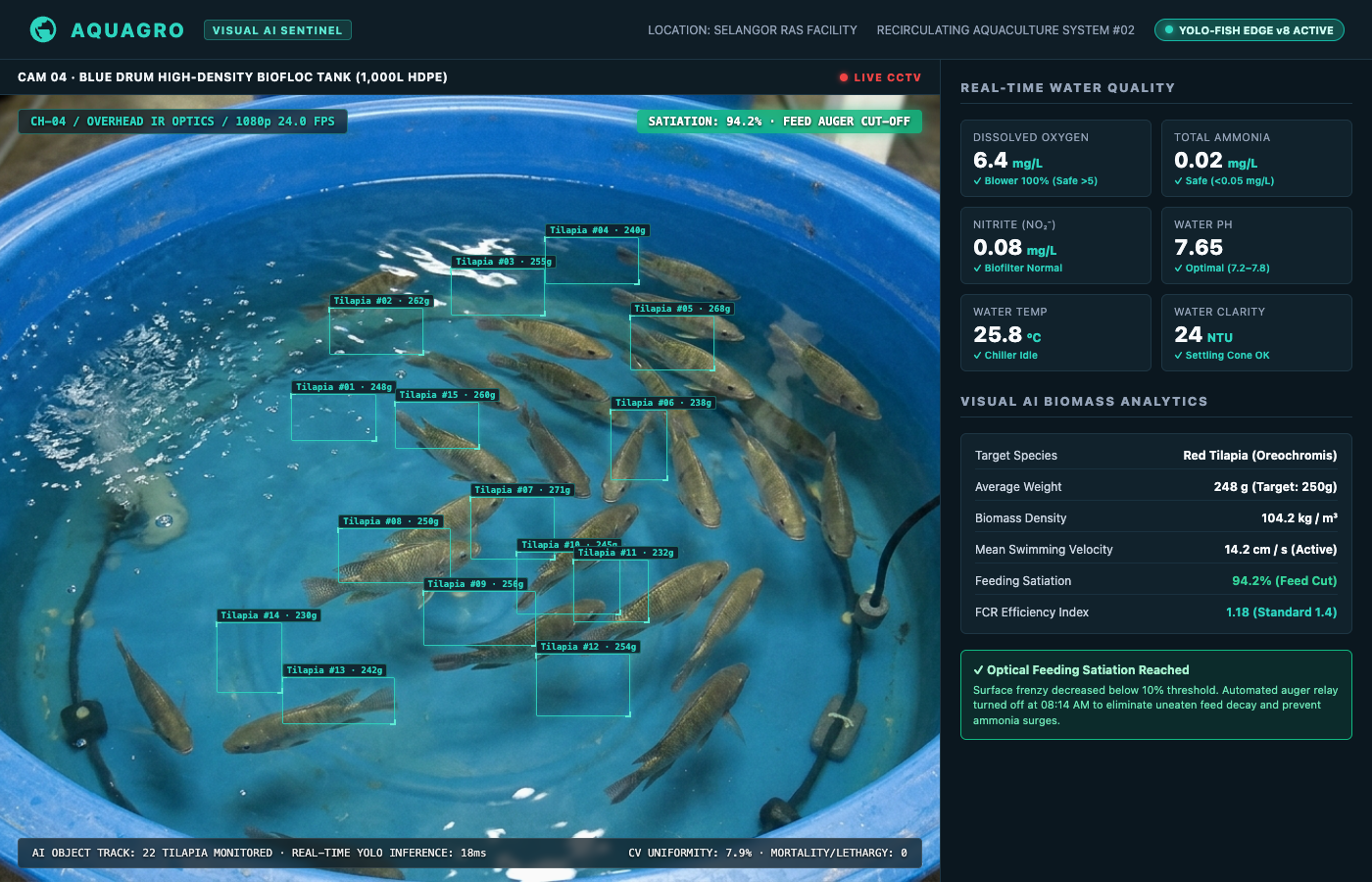
In recirculating aquaculture systems (RAS) and high-density biofloc drums, water is a living, fragile ecosystem. Commercial operations pack between 80 kg and 120 kg of live fish per cubic meter inside 1,000-liter blue HDPE drums. At these stocking densities, biological oxygen demand is immense. If a regenerative blower trips or aerator nozzles clog, dissolved oxygen (DO) plummets from 6.5 mg/L to an asphyxiating 2.0 mg/L in under 45 minutes, killing entire drum populations before operators discover the failure.
Equally damaging is feed mismanagement. High-protein pelleted fish feed represents 60% to 70% of total operating expenditure. When farm hands feed on a fixed schedule, fish consume only until satiated; remaining pellets sink to the drum floor, decomposing into toxic un-ionized ammonia (NH₃). Ammonia damages gill lamellae, reduces oxygen absorption, and overloads the biofilter's nitrifying bacteria (Nitrosomonas and Nitrobacter).
Top Problem Areas in High-Density Aquaculture
Field trials across commercial biofloc tanks and urban aquaponics sites reveal three persistent technical bottlenecks:
| Failure Vector | Conventional Tank Management | AQUAGRO Visual AI & Telemetry |
|---|---|---|
| Hypoxia & DO Collapse | Manual dip tests. Tested 1–2 times daily. Sudden blower failure suffocates tanks within 45 minutes. | Continuous optical DO telemetry. Sub-second polling triggers secondary venturi blowers and SMS alerts if DO drops below 5.0 mg/L. |
| Feed Waste & Satiation | Fixed weight dumping. 15–20% of feed goes uneaten, sinking to the cone bottom and rotting into ammonia. | Optical feeding frenzy tracking. Computer vision measures surface turbulence; cuts feed auger at 90%+ satiation. |
| Water Chemistry Surges | Colorimetric chemical kits. Slow chemical droplet tests conducted weekly after fish show distress symptoms. | Digital multi-parameter array. Continuous galvanic monitoring of ammonia, nitrite, nitrate, salinity, and pH. |
AQUAGRO Green & Teal Aquaculture Command Suite
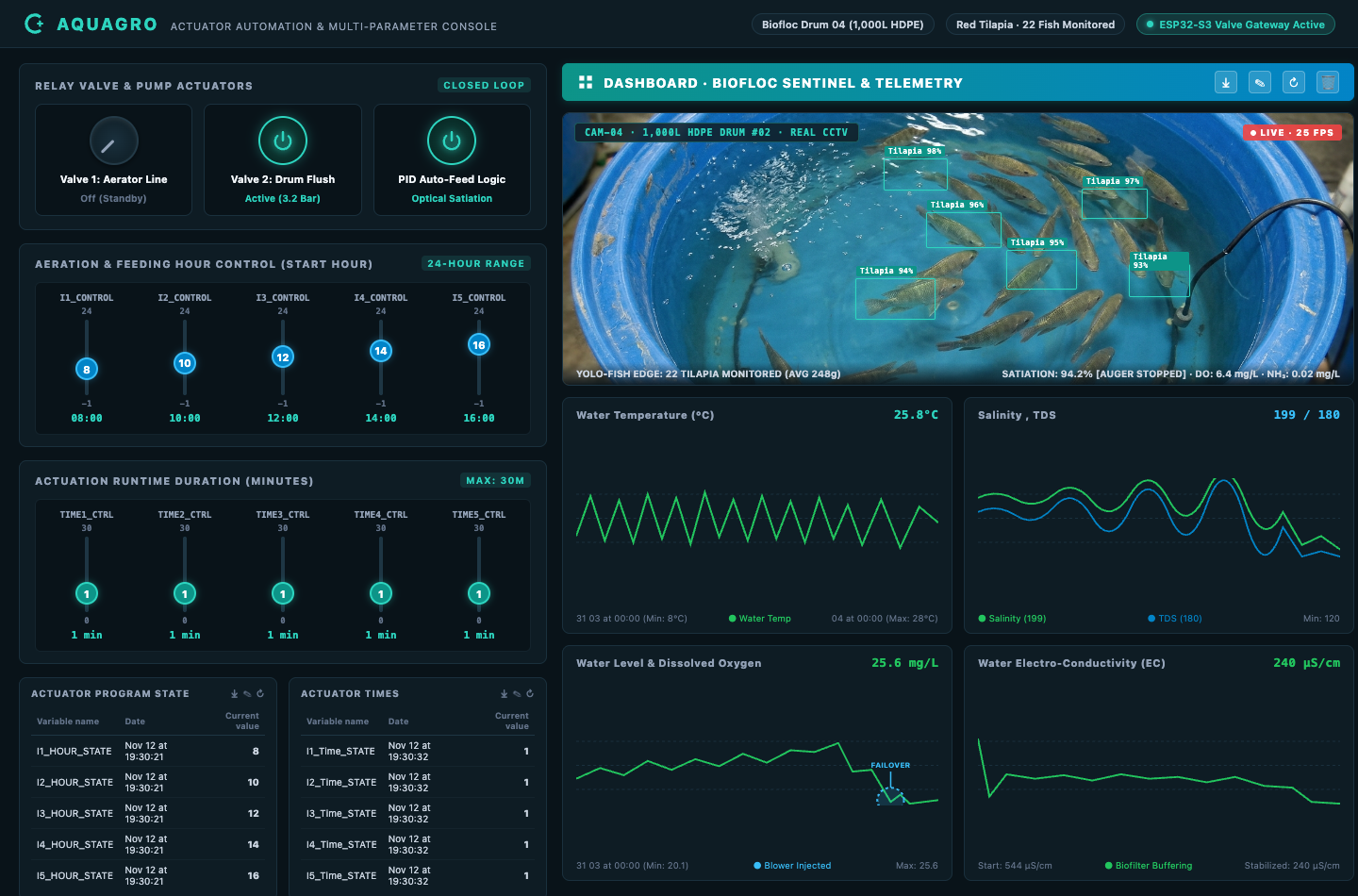
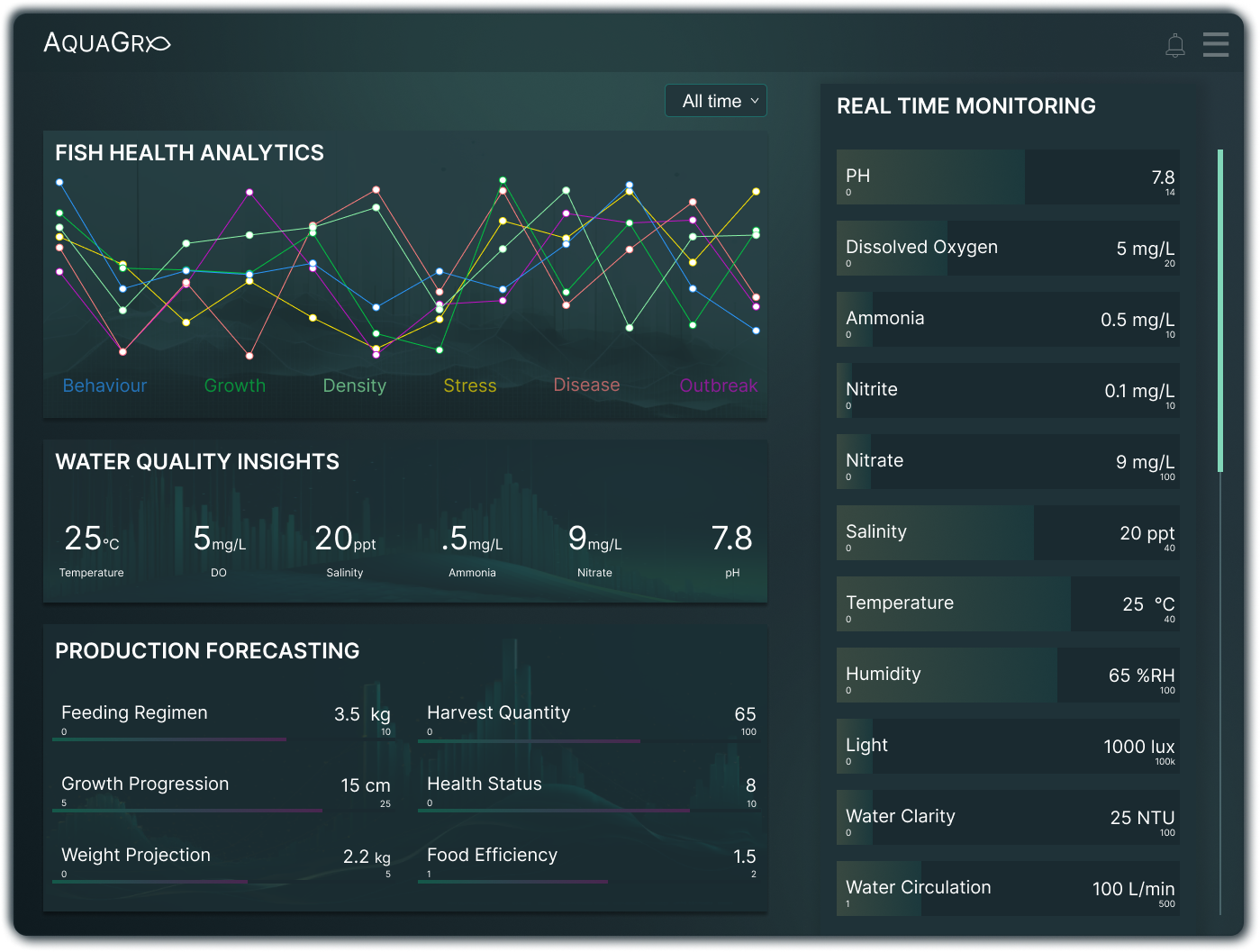
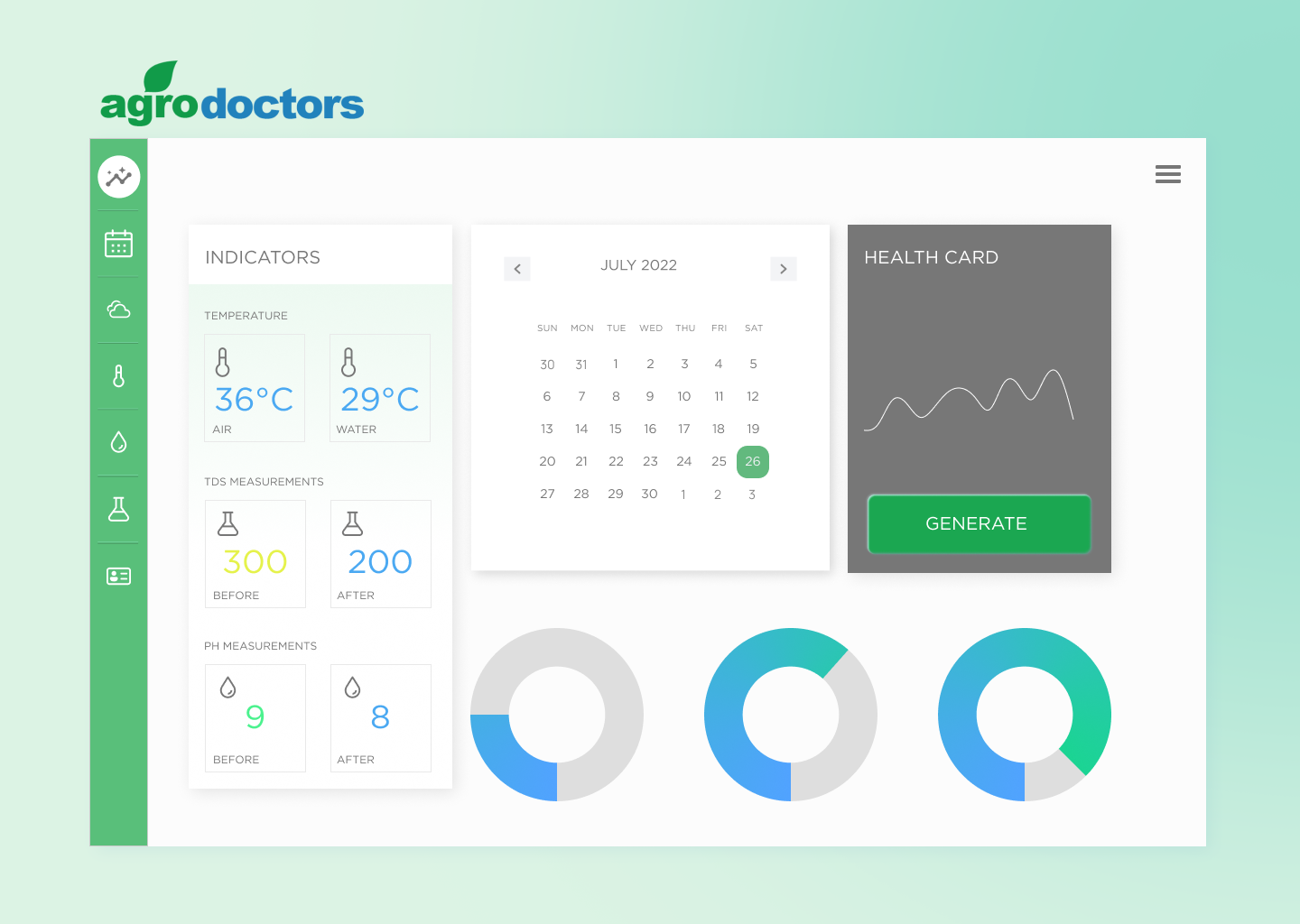
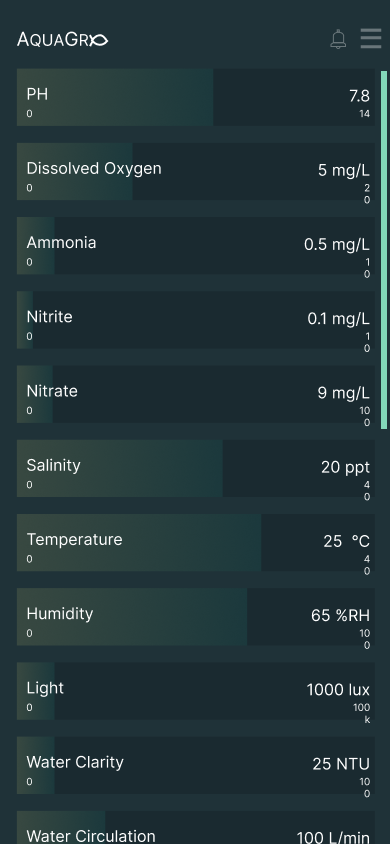
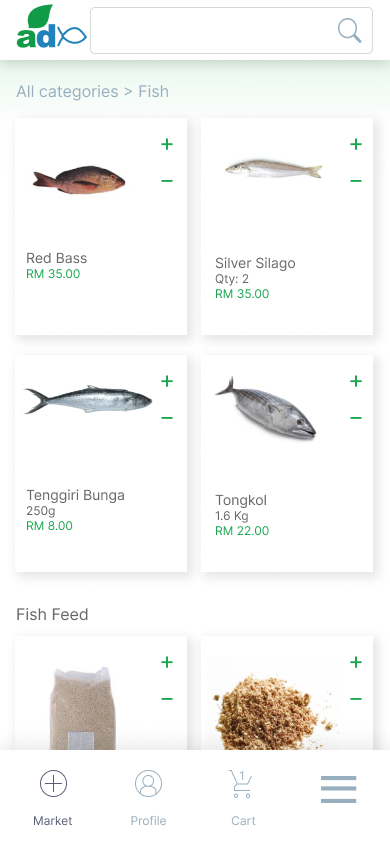
The platform pairs overhead vision with multi-node water sensors, streaming telemetry across desktop command stations, actuator consoles, and mobile apps. The entire aquaculture system is unified by an aquatic deep-teal and green color architecture calibrated for high contrast under indoor fluorescent and natural pond lighting:
Lean Business Model Canvas
- Hypoxia crashes cause total tank stock loss within 45 minutes of blower failure.
- Overfeeding wastes 15–20% of expensive feed and generates toxic ammonia.
- Manual water testing cannot catch sharp midnight biofilter nitrifying crashes.
- Inland high-density biofloc drum fish farms (Tilapia, Seabass, Perch).
- Commercial commercial aquaponics and closed RAS hatcheries.
- Government fishery incubation programs and university aquaculture facilities.
- Overhead CCTV visual AI appetite detector that cuts feed augers at satiation.
- Continuous optical DO monitoring with automated failover aerator relays.
- 18% reduction in feed expenditures and zero mass hypoxia die-off events.
- Modular drum sensor and camera kit deployments ($850 to $1,900 per cluster).
- Cloud telemetry, automated alerting, and feed optimization SaaS ($20/month per facility).
- Direct marketplace transaction facilitation for live fish harvest pre-orders.
- Galvanic and optical DO sensor procurement and membrane replacements.
- Weatherproof IP67 camera housings and edge inference compute micro-boards.
- Firmware maintenance, cellular 4G/LoRa telemetry gateway data plans.
- Trained optical surface frenzy model calibrated specifically on blue HDPE drums.
- Integrated failover hardware architecture that works off-grid with 12V battery relays.