Why Growing Gourmet Mushrooms In Tropical Heat Is A Humidity Nightmare (And How Smart IoT Misting Fixes It)
Whether you’re growing Grey Oyster, Lion’s Mane, Shiitake, or King Oyster—too dry and pins shrivel, too wet and bacterial blotch rots the crop. Here’s how automated ESP32 microclimate sensors keep tropical fruiting sheds at the exact humidity and CO₂ each species demands.
Indoor mushroom cultivation in tropical climates requires navigating a razor-thin environmental corridor regardless of species. Whether cultivating resilient Grey Oyster (Pleurotus ostreatus), delicate Lion's Mane (Hericium erinaceus), King Oyster (Pleurotus eryngii), or savory Shiitake (Lentinula edodes), mycelium demands precise species-calibrated relative humidity (typically 85% to 92%) paired with ambient temperatures below 28°C. Dropping below critical humidity thresholds for just three hours aborts fragile pinheads, while traditional manual hose-spraying splashes standing water onto caps, triggering fatal outbreaks of bacterial blotch (Pseudomonas tolaasii).
Simultaneously, active fungal respiration rapidly consumes oxygen and expels carbon dioxide. In poorly ventilated sheds, CO₂ concentrations climb beyond 1,200 to 1,500 ppm within hours. For capped varieties, this hypercapnic air stunts cap expansion and induces grotesque, unmarketable stipe elongation. For branched varieties like Lion's Mane, excess CO₂ prevents normal spine formation.
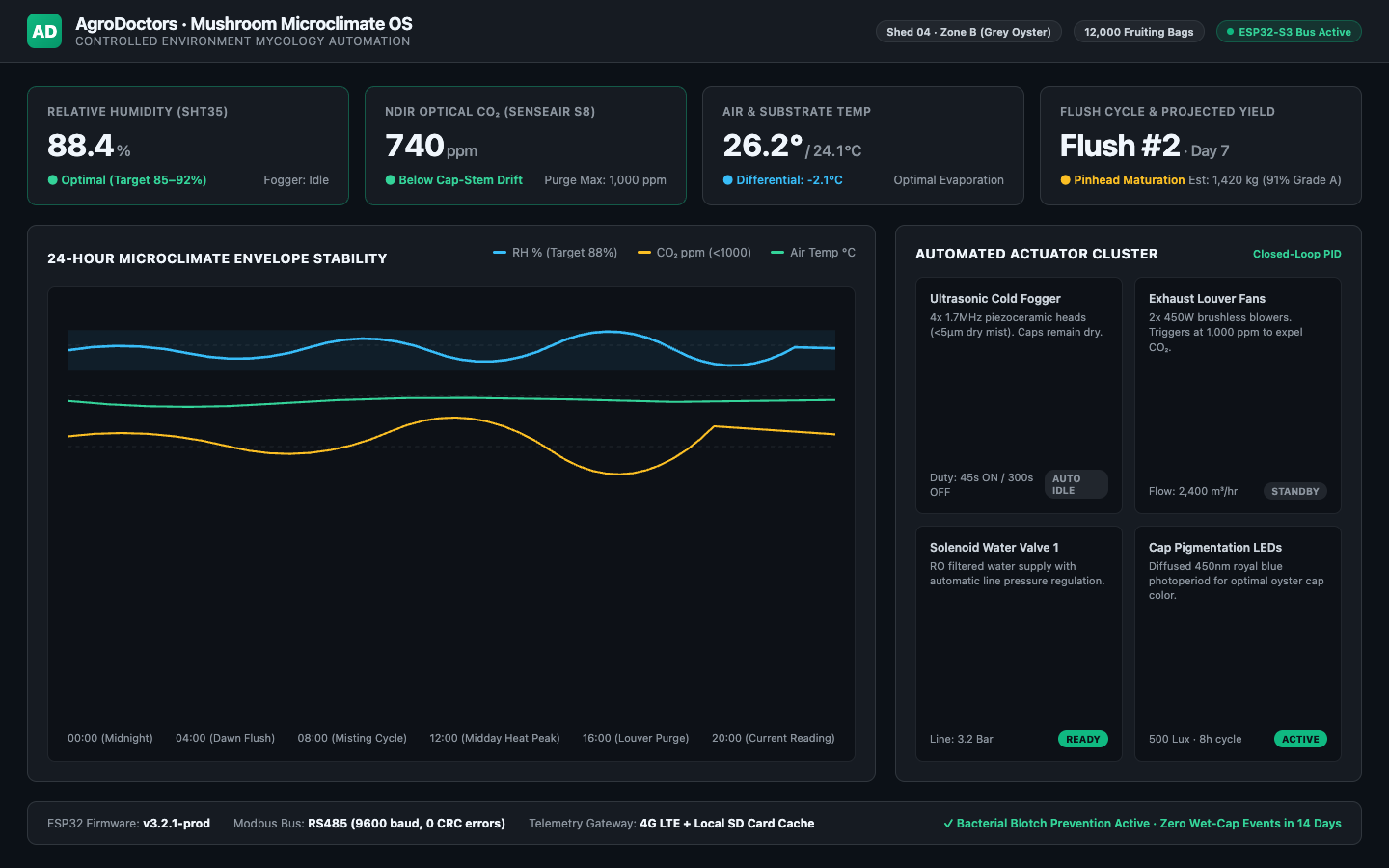
Top Problem Areas in Tropical Mushroom Farming
Smallholder and semi-commercial mushroom sheds throughout Southeast Asia face three chronic points of failure:
| Failure Vector | Conventional Manual Shed | AgroDoctors Autonomous Closed-Loop |
|---|---|---|
| Humidification Method | High-pressure overhead sprayers. Creates 50–100µm water droplets that pool on caps, causing bacterial blotch. | Ultrasonic cold atomization. Micro-droplets (<5µm) remain suspended as dry fog, elevating ambient RH without wetting caps. |
| Gas Exchange (CO₂) | Static wall mesh. Stagnant air allows CO₂ to settle at floor level, producing elongated stipes and tiny caps. | NDIR optical closed-loop. Dual sensors trigger positive-pressure louvers once CO₂ hits 950 ppm, purging heavy gas. |
| Substrate Hydration | Guesswork hose spraying. Fluctuating moisture shrivels pins and rots rubberwood sawdust bags. | Pulse-width solenoid cycling. 30-second atomization micro-pulses maintain steady 88% RH 24/7. |
Mobile Sensor Telemetry & Actuator Automation Suite
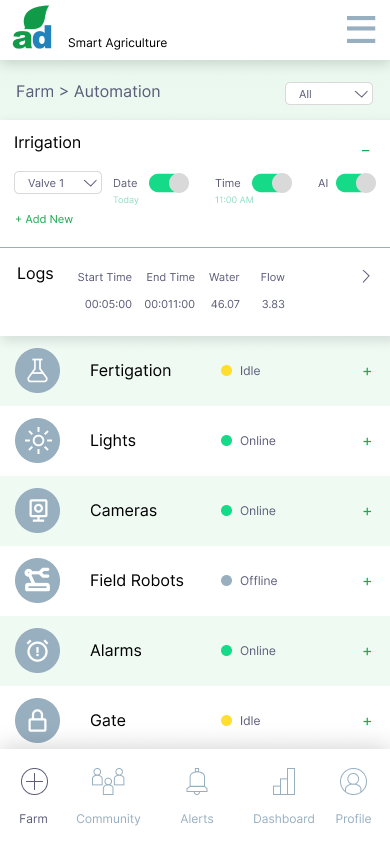
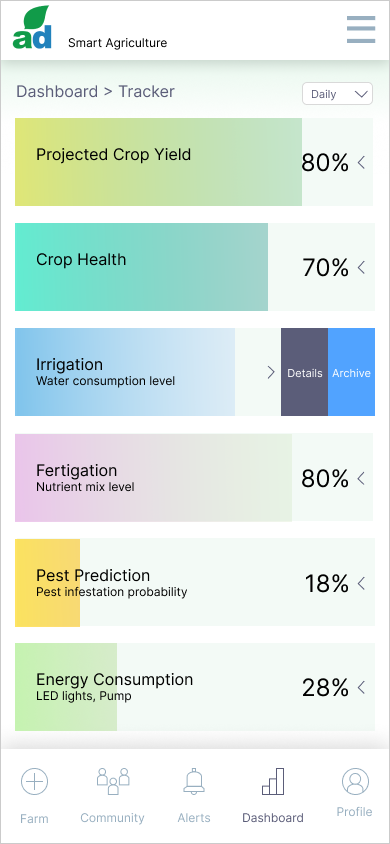
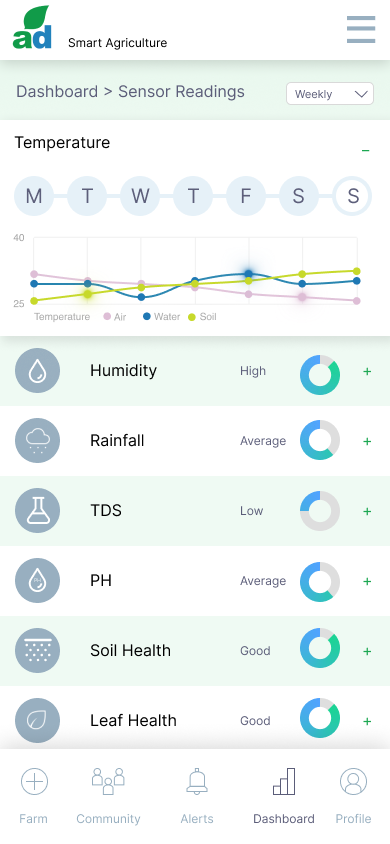
The AgroDoctors platform couples low-power ESP32-S3 controllers with solid-state relay manifolds. Growers monitor and calibrate their facilities through the AgroDoctors mobile application, which integrates real-time environmental alerts with automated batch control:
Lean Business Model Canvas
- Cap bacterial blotch from coarse sprinkler droplets destroys 20–30% of flushes.
- High CO₂ (>1,200 ppm) causes unmarketable elongated mushroom stems.
- Manual watering requires 3 daily visits, wasting water and labor.
- Smallholder grey oyster mushroom growers (5k–50k bag sheds).
- Specialty medicinal mushroom producers (Lion's Mane, Reishi, Cordyceps).
- University mycology research departments and urban container farms.
- Drop-in autonomous microclimate box stabilizing 88% RH without wetting caps.
- Automated NDIR-triggered CO₂ purging louvers.
- 24% higher Grade-A commercial yield with 70% lower water usage.
- Direct hardware controller deployments ($550 to $1,100 per shed).
- Optional cloud telemetry and multi-shed analytics SaaS ($12/month).
- Replacement piezoceramic ultrasonic atomizing discs and pre-calibrated sensor pods.
- Precision NDIR optical CO₂ sensors and SHT35 probe sourcing.
- Industrial IP65 weatherproof controller enclosures and custom PCB assembly.
- Cloud telemetry database hosting and mobile push notification relays.
- Pre-programmed biological growth curves for tropical grey and white oyster strains.
- Field-tested hardware validated across high-humidity commercial mushroom sheds.